Exciting opportunities arise in uncertain and difficult times.
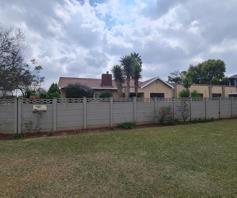
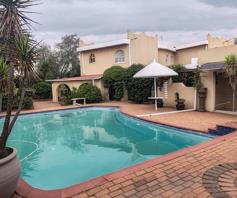
 This high profile residential block, Braam Lofts, comprising student accommodation which is situated in Braamfontein in Gauteng sold for R17 million on auction.
This is according to Norman Raad, CEO of Broll Auctions and Sales, who says at the last two auctions they experienced an increase in confirmations of transactions before or on auction days, the main reason being that sellers are becoming more realistic in terms of market-related expectations.
Raad says the majority of property owners have enjoyed a tremendous run, created by a perfect storm of low interest rates and a developing economy. However, this curve has taken a turn, with all the indications of this being apparent for over a year, coupled with the plummeting currency in December (2015).
Raad says sellers are exercising caution and concern about what the future holds and this has been displayed by the increase in properties reaching the market.
Since launching in March 2015, Broll Auctions and Sales has achieved in excess of R1 billion worth of commercial property sales around the country. These include the sale of a residential block comprising nine apartments, situated in Hillbrow in Johannesburg that fetched R420 million, an office block in Sandton which sold for R85 million, a shopping centre in Queenstown in the Eastern Cape which was acquired for R63.8 million, a retail and parkade property in the Johannesburg CBD which sold for R45 million and an office block in Morningside, Durban, which achieved R40.2 million.
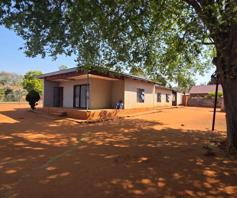
 Parktown Views, which consists of student accommodation situated in Parktown, Gauteng, sold for R13.25 million on auction.
Another property, ‘River Song’ comprising 318 hectares of land, situated on the M26, 15 minutes from Fourways Mall in Gauteng and only a few kilometres from sought-after Copperleaf Golf Estate, was sold for R32 million.
With the Hennops River running right through it, Raad says this beautiful property offers a variety of magnificent view sites, and should development rights be achieved, this will become an unparalleled estate ideally positioned close to Sandton.
“If our most recent auction, which took place on 14 June was anything to go by, then what we have been talking about for the past year regarding the headwinds expected for the property sector have made their impact felt. It’s a buyer’s market at the moment, with marginal properties attracting little or no interest. This is based purely on the ability to raise finance, linked to the expectations that the market won’t experience a positive spin in the near foreseeable future.”
According to Raad, there are still buyers in the market, however, they are investing their money wisely and prudently. He says this past auction saw some of the best properties taken to auction. Two high profile residential blocks comprising student accommodatio, situated in Braamfontein and Parktown in Gauteng sold for R17 million and R13.25 million respectively. He says a retail centre in Dundee, KwaZulu-Natal, attracted tremendous interest and competitive bidding akin to that of yester-year, when properties such as these seldom found their way to the market and opportunities were as scarce as hen’s teeth. This prime retail property with national anchor tenants sold for R31.3 million.
 This well-situtated office block in Sandton, Johannesburg, sold for R85 million on auction.
Notably, Raad says at this auction, the average price for student accommodation on the Parktown border and Braamfontein fetched R200 000 and R300 000 per residential unit. He says it was just a short time ago when the same apartments seldom achieved more than R100 000 per unit.
Raad says residential property is and will continue to be the most robust investment if well-managed. The new funds have already emerged and snapped up a lot of the larger residential buildings, but as for the emerging residential investors, they are aggressively starting to bulk up, understanding the need for high demand for residential urbanisation.
“The property market experiences continuous changes across the different sectors, but one sector that will remain in strong demand is the affordable housing market. Accommodation in South Africa is slowly becoming a privilege as the demand increases and availability and development is limited or lagging behind. There are just not enough apartments or homes to satisfy the existing and growing needs of our country, and especially close to or within the greater metropolitan areas. “
Raad says the likes of Afcho (now owned by SA Corporate Real Estate Fund) alongside City Property, which was led by the late and great visionary Alec Wapnik, identified opportunities and pioneered the buying of empty commercial buildings which they would convert into residential apartments to satisfy the growing demand and need in the Johannesburg and Pretoria CBD’s.
He says new market entrants competing for the same opportunities have driven the price up beyond anyone’s expectations. He says quality conversions are yielding far lower returns than historically, however, the rental market which is supported by the emerging business sector workers remains increasingly strong.
Raad says investing in bricks and mortar will remain on everyone’s radar, and even though the Real Estate Investment Trust (REIT) sector has made capitalising on property returns easier and more profitable, owning property is always a great long- term investment. Retail centres and residential buildings are still attracting low yields. The Dundee Shoprite centre, recently sold on auction, fetched sub 9% and was a target even for smaller REITs.As the economy becomes more constrained for multiple reasons, the opportunities will begin to surface. What may seem like an expensive and a difficult decision to buy property in this economy, it doesn’t take a lot for market sentiment and conditions to change, and then for commercial property to find some real growth again.
Raad says it is never the wrong time to buy good properties. He says over time, properties always increase and it is the one asset that will always retain an inflation hedge. Their advantage is that they are well-positioned and have direct access to the current property market to know what is being sold and what yields are being achieved, he says.