Urbanisation has been a major watchword of the 21st century, with 55% of the world’s population already living in urban areas and numbers expected to increase to almost 70% by 2050, however, the course of urbanisation is likely to be significantly altered by several forcible disrupters.

People often talk glibly about adapting to change, but in the wake of the Covid-19 pandemic and ensuing economic crisis, it seems more likely that we are going to have to fundamentally change in order to adapt to new situations, conditions and environments in the future.
“Over the past decade, we have already seen discernible changes in the workplace and in residential development spurred by millennial’s very different lifestyle needs and work ethic,” says Yael Geffen, CEO of Lew Geffen Sotheby’s International Realty.
PODCAST | Why Spatial Transformation matters now more than ever in South Africa
“Add to that increased security concerns, growing traffic congestion and, most recently, a global pandemic which literally changed the world overnight, and it becomes very clear that we have to rethink traditional ideas about urbanisation, planning and development.”
In many cities, the accelerating pace of urbanisation has been overwhelming, especially where unprepared or ineffectual governance and legal frameworks have impeded long-term planning to allow for continued and sustainable growth.
“One of the fundamental changes many of us have experienced in the recent weeks of lockdown has been the shift to remote working. While the necessary technology for remote working has long been available, it has ultimately taken a global pandemic to firmly prompt the shift online," says Dr Andrew Golding, chief executive of the Pam Golding Property group.
“Although in recent years, flexitime in order to avoid peak hour traffic congestion has been adopted by some businesses, and some have already been working from home due to the nature of their occupations, the realisation that remote working is a viable and achievable option has given rise to a new wave of thinking among both employers and staff. And who knows, if some scientists are correct, a potential need in the future for periods of social isolation would reinforce this emerging trend.”
'Traditional models are fast becoming outdated'
But even those that have factored in and managed urban growth over the years will now have to reconsider their future development plans as the traditional models are fast becoming outdated.
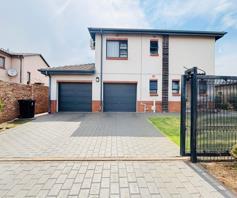
“As millennials settle down and start families, like their parents before them, they are exchanging their urban dwellings for family homes in suburbia to have additional space for growing families and be near good schools,” says Geffen.
“However, they have very different lifestyle requirements than previous generations and conventional suburbs generally fall far short of meeting their needs.
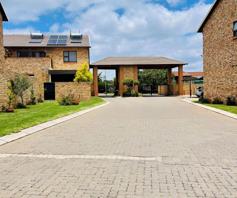
“Traditionally, suburbs were developed to optimise house and plot sizes, and being very car dependent, most have very few amenities within walking distance, but millennial suburbanites want a very different of landscape and expect the convenience, walkability and sociability of cosmopolitan urban life.”
'Current zoning bylaws impede shifting demands'
Conventional zoning regulations will be increasingly challenged as the way in which we live and work continues to change as well as the suburb layout that we still see in most areas, believes Matthew Gray, Cape Town-based Urban Designer and Architect.
“The broad idea of zoning is to create a degree of certainty and parity regarding what one can legitimately expect in a specific area, but many of the current zoning bylaws and existing suburban planning impede development that would best cater to these shifting demands.”
Gray points out that, as it is, the current planning in most South African cities already falls far short of meeting basic needs such as accessibility and security, largely due to the implementation of short-term planning solutions over the years largely due to the legacy of old suburban planning ideas persisting.
SEE: How the new water bylaws will affect Cape Town homeowners
“One of the main issues of car dependent suburban sprawl is that it makes traveling greater distances necessary to get from point A to point B and it also makes public transport less viable because of the lower population density.
“And with most suburbs having few amenities, and those that they do have are seldom in a central accessible location, people have no choice but to drive when they need something, with cul de sacs making the route even more convoluted than necessary.
“As a result, traffic is channelled to main roads which become even more congested and fewer people use public transport as they will have to drive to reach the routes or pick up zones anyway.
“Security is another major issue with suburban development typology as it is an indefensible building typology which has led people to believe that the only way to secure their properties is with high walls.
“And high walls not only obscure criminal activity from the outside, it also makes the public spaces like streets and parks more dangerous as they cannot be seen from the surrounding homes.
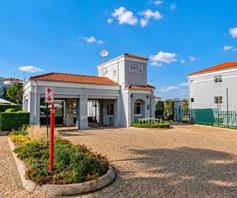
“This is even more of an issue when the community is gated with only one entrance as controlled access works both ways. Yes, it can keep bad elements out, but it can also trap residents if there is a dangerous situation at the only access point.
Gray believes that the fundamental foundation of good urban planning is efficiency and says a good urban planner will not simply follow the current model but will assess many criteria, including the needs of the target market, in order to design the most sustainable planning solution.
'Strategies of de-densification'
Geffen says that Covid 19 has also raised a number of challenging questions for planners and policymakers around the issue of urban density, especially as many efforts to control the spread of virus have included strategies of ‘de-densification’ and social distancing.
“In addition to shifting residential planning priorities, we also have to consider the changing nature of the workplace, and the epidemic’s impact on commercial real estate because it’s very likely that a number of the temporary lockdown measures will become the new ‘normal’.
“We are already seeing the influence of Millennials who adopt new technologies much more easily than their predecessors, are more comfortable doing business remotely or virtually and also often expect to be given the tools and freedom by employers to do so.”
Ultimately, a different approach to investment thinking is required. Although we know that remote working will become more prevalent, the team culture created by shared workspaces remains an invaluable psychological motivator, so there will be a continued demand for commercial spaces.
SEE: PICS | Work from home offices - the unglamorous edition
“However, we need to consider what the “new normal” offices will look like going forward, and therein lie the savvy investment opportunities.”
“As with online working, the shift towards greater home sustainability appears to be an example of the Covid-19 crisis accelerating trends that were already underway," says Golding.
“In recent years, the combination of worsening congestion and rising house prices has seen many South Africans opting to sacrifice living space for homes closer to their places of work or transport hubs - a trend which has fuelled the rapid development and densification in business nodes and commercial hubs across the country. The question is, for the abovementioned reasons, will Covid-19 slow the pace of densification in our residential markets?
'Reconsinder the compromise on personal living space'
“Faced with significantly more time spent at home, amidst a shift to remote working or simply as a result of any possible future lockdowns, homeowners may well begin to reconsider the suitability of their current homes," says Golding
“This would be particularly true of those who have opted to significantly compromise on personal living space, residing in small compact studios, apartments or homes, with the intention of using shared facilities such as gyms, restaurants and co-working spaces. While these common or shared spaces may not be available during a lockdown, the prospect of any future sustained periods of social distancing amidst fears of infection may well reduce the appeal of shared amenities and much smaller living space, particularly in highly densified areas.”
“For instance, older commercial buildings ripe for refurbishment are ideal for creating new office environments that place a premium on natural light and more open and spacious floor plans that provide workers with slightly more privacy and personal space, rather than traditional work station clusters.”
Geffen believes that once the dust has settled, we will have a generational opportunity to re-define the social, economic and environmental fabric of our cities and that mixed-use spaces will be an integral part of new planning.
“Areas with mixed configurations of residential, commercial, industrial and office components with adequate space reserved for public use will probably best contribute to urban productivity in the future by making efficient use of a city’s resources and, in turn, driving economic growth.”
'Attractiveness of access to private outdoor space'
Says Golding, “In addition to a possible desire for more generous living spaces, even more multi-generational living with shared costs, the prospect of more time at home may well increase the attractiveness of access to private outdoor space - no matter how compact - while the imminent return of loadshedding may increase the desire for a greater degree of self-sufficiency at home, such as solar panels, boreholes or even an urban food garden.
READ: Adding a home gym has never been more appealing. Here's how to do
“And could it accelerate the move to smaller towns across South Africa? Others have opted to move to suburbs on the periphery of major metro areas or, increasingly, to smaller towns and villages - particularly those located along South Africa’s extensive coastline – many of which have traditionally been viewed as retirement or holiday destinations but which now beckon as permanent residential locations.”
“As a result, in recent years, many of these areas have seen an influx of younger buyers and those relocating for future retirement, attracted not only by the relative affordability of the homes but also by the improved amenities, such as private schools and hospitals, and importantly, more relaxed lifestyles.
“Bearing in mind that at present, we remain in the early stages of this pandemic and therefore have no idea as to its full extent and its likely long-term implications, it is also likely that the longer it drags on, the greater its impact on the way we live and work will be.”
'Post pandemic innovations for developments'
Adds Sandra Gordon, Pam Golding Properties senior research analyst: “At present it appears possible that the recent trend towards densification in business hubs will slow, as social distancing and remote working become more mainstream. The desire for more generous personal living space may well accelerate the trend towards more decentralised living.
“Longer-term, developers will undoubtedly adapt to the long-term effects of the pandemic and growing concerns around climate change. In the same way that better sanitation was introduced in the wake of the Spanish ‘flu a century ago, post pandemic innovations for commercial and residential developments are likely to emerge in the years ahead.
“The key challenge for developers in future will be to combine density with safety, creating spaces which create a sense of community yet also ensure the health of residents.”