*Article updated 29 May 2023
Kitting out a kitchen or your home with gas appliances is a smart solution if there is going to be continued load shedding for a long time.
Were you aware of the fact that all gas appliances must be installed according to the Occupation Health and Safety Act? The installation of gas appliances as an alternative to electrical appliances has resulted in many homes being fitted with only gas appliances or a combination of gas and electric appliances.
The reason for this increase is glaringly obvious; load shedding is making it increasingly difficult for the average home to operate as a family unit should.
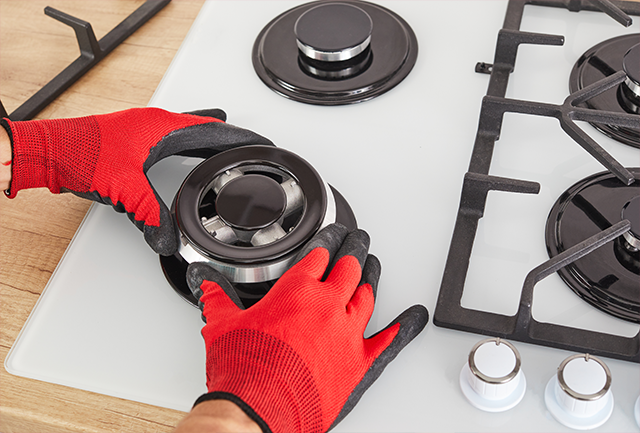
Homeowners should according to TheSpruce also be aware that a gas leak is a serious safety hazard that should never be ignored. If the odor is very strong, don't wait—leave the home immediately and call the gas utility company to investigate. There is a notable danger of explosion and fire if the air is heavily laden with a strong gas smell.
READ: Gas safety | How to switch to gas as a cheaper energy source
In terms of the Health and Safety Act requires that all gas appliances be installed according to health and safety regulations, mainly due to the fact that incorrect installation of these appliances can result in dangers that may result in damage to property or even death. It was too easy for the average person to simply install gas appliances without considering the implications if done incorrectly.
When gas appliances are installed in line with regulations certain guidelines remain as regards the safe use of gas appliances. You will find these guidelines under the SANS standard for gas installation and safe usage. Visit sabs.co.za for more information in this regard.
The installation procedure for all home gas appliances must receive a Certificate of Compliance (COC) from the installer and this installer must be an authorised installation agent that is registered with the LP Gas Association of South Africa (lpgas.co.za) or one that is qualified with the South African Qualification and Certification Committee (SAQCC).
READ: Is a compliance certificate required when solar energy is used?
What happens if you install gas appliances without a COC, you may ask?
In the event of damage to a property, your insurance will not cover this without a valid COC.
A home insurance company can refuse a claim for damage caused by gas appliances not installed by a registered installer and without a Certificate of Compliance.
If you still have existing appliances installed in your home, the onus is on you to ensure that they meet health and safety standards. The COC covers gas heaters, gas stovetops, hobs, or ovens, as well as gas grills and braais. Gas fireplaces and hot water systems must have a COC. If you are not covered make the soonest appointment to have a registered gas installer inspect gas appliances and issue a COC as there are strict regulations as concerns minimum distances for gas cylinders in relation to entry and exit points in the home, windows, drains and electrical / power outlets.
Gas appliances not correctly installed could result in a gas leak that will have major health and safety implications for you and your family, and that does not include the danger of damage to a property as a result of an explosion.
According to thegasman.co.za regulations apply to any existing or new gas installations and these regulations must be adhered to in order for a Certificate of Compliance to be issued. Copy and paste the link for full details on regulations relating to the installation of gas appliances in a home.
READ: Building vs Home contents | Know exactly what your insurance covers
Nirvan Brijlal, Acting Managing Director of Liquefied Petroleum Gas Association of South Africa (LPGSA),it is extremely important that you make use of registered professionals to perform the installation and maintenance of LPG appliances and cylinders.
Used in accordance with safety guidelines, LPG is a clean, reliable alternative to other fuels. The following tips will ensure that you are able to use your appliance safely and effectively.
General safety tips
- Always consult the manual that came with the appliance for specific safety tips.
- Keep LPG appliances and fittings in good condition via regular servicing.
- LPG appliances should be serviced by licensed LPG installers or service companies only.
- Check your appliances regularly for deterioration in performance, signs of corrosion and minor leaks.
- Make sure that the area in which you use your LPG appliance is well-ventilated.
- Do not detach cylinders, regulators or any connections while the LPG appliance is in use.
- Do not leave appliances unattended while in use.
- Ensure that the gas supply is turned off at the cylinder after use and while the appliance is unattended.
Refilling your LPG cylinder:
- Check that your gas cylinder is correctly filled or exchanged in good time
- When exchanging your empty cylinder for a filled one, make sure that your replacement cylinder has been legally and safely filled by checking that there is a shrink wrap seal covering the cylinder valve.
- Do not accept the cylinder if there is no seal or if the seal is clear with no writing or branding.
- If the seal only has the words LPG or LPGas printed on it, do not accept the cylinder – even if the seal is a coloured one.
- The only acceptable seal is one that has the same branding on the seal as is on the body of the cylinder.
Connecting your new cylinder
- Always make sure you are working in a well-ventilated area.
- Roll-about heaters are connected to the LPG cylinder via an orange hose and a regulator – the regulator screws into the cylinder valve. - Always ensure that the cylinder valve is closed before loosening/removing the regulator.
- Check that there is a rubber seal on the end of the regulator. The rubber seal is also referred to as a bullnose, O-ring or washer, and is the seal between the regulator and the cylinder valve.
- Ensure that the rubber seal is located on the end of the regulator and is in good condition and not perished, cracked or damaged in any way. The seals can become brittle over time, may split or even become lodged inside the valve of the LPG cylinder.
- A damaged seal is a prime cause of gas leaks. Seals should be checked regularly. - Remember, the regulator has a left-hand thread. So, to connect the regulator, you need to turn it in an anti-clockwise direction. To remove the regulator, turn it clockwise.
Checking for gas leaks
- Once you have connected the regulator to the cylinder valve, open the valve one and a half turns only – it is not necessary to open it further.
- Before igniting the heater, wait a half a minute or so to see if there is any smell of gas.
- If there is a smell, immediately close the valve and take the cylinder and heater to an LPG dealer to check and, if necessary, service the heater.
- You can also check for a leak by applying a soapy water solution on all joints. The soapy solution will create bubbles if the gas is leaking.
- Once you have checked for leaks you should lift the gas cylinder into the housing behind the LPG heater and close the housing panel or backing plate.
- It is important that the LPG cylinder is in the space at the back of the heater to prevent the cylinder being knocked over.
- Make sure you use the correct size of cylinder for the heater you are using.
- Once the cylinder is safely in place and there is no combustible material (e.g. Curtains, blankets, doily) close to or on top of the heater, ignite the heater.
Four places to shut off the gas if you smell a leak:
If the smell is faint, you can investigate a bit to see if you can determine where the leak is located, then turn off the gas near the leak before calling the utility company. In the vast majority of cases, the gas leak will be near some appliance in your home.

Possibilities include:
- Gas stove, oven or range
- Gas water heater
- Gas furnace or boiler
- Gas fireplace or other gas-fueled heaters
Here are some methods for turning off the gas if you smell a leak. You made need a wrench and have some knowledge of how a gas valve works.
1. The stove or oven
The kitchen stove is the most obvious location for a gas leak. As with most gas appliances, the various connections that link the stove to the main gas line are the most likely places for leaks. Make sure not to start up the stove burners or oven while this gas smell is in the air. Although the chances are remote, it's possible that a heavy gas saturation in the air could be ignited in the presence of an open flame.
Sometimes a gas smell can be caused simply by one of the stovetop burners that have accidentally been turned on without the burner igniting. In this case, turn off the control dials, open a window, and wait for the smell to dissipate.
The gas line connections to the stove or range are normally located behind the stove. The appliance must be carefully pulled out from the wall a short distance to expose the gas line and shutoff valve. With the gas valve shut off, the connections can be examined and tightened.
2. Geyser
If you suspect the geyser is the source of a gas leak, you can shut off the gas there. This valve will shut off gas to the geyser only. It's especially important to shut off the gas if you suspect a leak here since geysers fire up automatically and you want to avoid any open flames whatsoever if you suspect a gas leak.
The gas shut-off valve on a geyser is usually rather close to the heater, located on the gas pipe that runs from the main gas line to the burner chamber. The gas pipe can either be a rigid black pipe or a flexible gas tube, and the shutoff valve will be located near the place where the gas line branches to the geyser.
3. Heater
If you smell gas near your heater, look for a valve handle on the gas pipe close to the body of the heater. Turning it so the handle is positioned at 90 degrees to the line of the pipe will turn off the gas.
If the gas shutoff valve is not immediately visible, trace the gas pipe backward from the heater. The shutoff valve may be located a few feet from the body of the heater.
The gas meter
If you find no appliance that is the likely source of the leak or cannot find a method of turning off the gas as a suspected appliance, you can go directly to the gas meter to shut off the main gas valve. If you suspect a leak near your gas geyser, for example, and find no gas shut-off valve near the geyser, the main shutoff valve may be the only option.
Turning off the main gas shut-off at the meter ensures that there isn't any more gas being fed into the house at all; it should be your option whenever you can't tell what appliance is the source of the leak or can't find a local shutoff valve.
The gas meter is usually located in a utility area of the home, such as the garage, or along an outside wall.
(SOURCE: Home-Dzine, LPGSA, TheSpruce)
Want all the latest property news and curated hot property listings sent directly to your inbox? Register for Property24’s Hot Properties, Lifestyle and Weekly Property Trends newsletters or follow us on Twitter, Instagram or Facebook.