People are under the impression that termites are the only insects that are harmful to wood, when in actual fact they don’t deserve all the credit. As their name suggests, wood borers, which are a type of beetle with the larvae causing the damage, also bore themselves into wood.
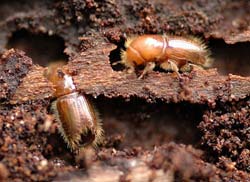
There is a general misconception that wood borer are more prominent in coastal areas, which is entirely untrue.
A serious misconception is that the wood borer beetle is more likely to be found in coastal areas. Although coastal areas do provide the damp and humid conditions the beetles prefer, these same conditions can be recreated in flooring where the sub-floor ventilation is insufficient. For this reason the South African Pest Control Association (SAPCA) has set out to raise the level of awareness in the Gauteng region.
According to SAPCA board member, Sue Alcock, people relocating from coastal areas to Gauteng should have their furniture fumigated, especially if they have been living in an older area of their city. “There has been a noticable increase in imported furniture or timber having wood borer, despite the fact that it should be fumigated before leaving the country or area of origin,” says Alcock.
Just like termites, wood borer beetles are small insects that can fly as adults and lay their eggs in untreated timber, chewing wood as their primary food source. Both these insects can cause serious structural damage in buildings and houses where wood is used. According to Mark Enslin, President of SAPCA, they are bombarded with complaints from consumers who purchased a new house only to discover they have an Anobium Punctatum (common furniture beetle) infestation beneath their beautiful hard wood floors.
For this reason it is of the utmost importance that homeowners ensure that they receive an actual Entomological certificate when purchasing a new home. This is a certificate issued by a registered Wood Destroying Organisms (WDO) inspector declaring a property to be free from all wood destroying insects and in some cases, dry rot.
Homeowners need to insist on a comprehensive beetle clause from SAPCA being added into the deed of sale as an addendum - it is their legal right. This clause not only covers all wood destroying organisms of economic significance, but also ensures that the inspection is carried out by a suitably qualified inspector registered with the Association.
In addition to the above the South African Wood Preservers Association (SAWPA) is appealing to government to regulate the treatment of timber against such insects as the wood borer beetle and termites. Durable timber is a scarce and expensive commodity, therefore the treatment of timber will ensure that all timber used as building material will be safe and provide a long term life, eliminating the harsh costs caused by termite or wood borer beetle damage. The treatment of timber is nothing more than the application of sufficient suitable preservation to the timber so that it will be able to be used on the long term. Proper treatment will enable builders and homeowners to design and build their dream homes with confidence without the added fear of being attacked by insects or fungi.
CCA treated timber can be recognised by it’s slight green hue, which is due to the preservative that is imbedded in the timber. This preservative is an indolent material, which means that it doesn’t actively kill insects, but rather offers resistance when attacked by these pests - it is used in a defensive capacity.
Although the solutions to the problem of termites or wood borer beetles may seem like a difficult task for homeowners, SAPCA offers the public asistance on this matter. For more information click here to visit the website.
Readers' Comments Have a comment about this article? Email us now.