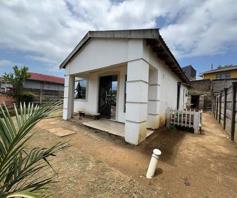
Until recently, building a new home was considered more cost effective than buying, and the advantages of the buyer being able to choose his own designs and finishes added to the appeal. Building stats for the third quarter of 2007 indicated that the rate of building material cost increases had slowed for the fourth consecutive quarter. While this slowdown doubtless contributed to the perception that it was cheaper to build, examples given in the media often failed to take account of the varying cost of residential land.
"Buying an existing property and renovating it to your liking still offers a far better return on your investment than building from scratch," says Mike Bester, CEO of Realty1 International Property Group. "In addition, it's much less stressful than dealing with the problems associated with selecting a reliable building contractor in an industry that is suffering from the same shortage of skills as many others in the country right now."
A recent report in FNB's Commercial Property Finance Residential Building Cost Index puts the construction cost of an average house currently at around R4800/m², but this figure is considered to be exceptionally conservative and the reality is closer to R6000/m² for basic finishes and anywhere from R10,000/m² upwards for more luxury.
With the power crisis further hampering the building of new residential units - both freehold and sectional title - the cost of building is pushed up further by having to budget for the installation of alternative power supplies.
There are some definite advantages to buying an established home, says Bester. "The first and most obvious factor is location. Very few established suburbs have residential plots available for sale, and those that can be found are usually expensive. In a newer suburb, the buyer runs the risk of building in an area that later might not meet his criteria in terms of amenities and type of homeowners."
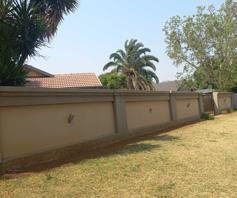
And then there's the garden. "'Second-hand' properties usually have established gardens," says Bester, "while new properties require landscaping from scratch."
Another benefit of buying an existing property is that structure, fittings and finishes can be physically inspected for quality, defects and poor workmanship before buying. The neighbourhood and amenities are established and the plots are generally also larger than in newly developed areas. However, the buyer will be responsible for transfer duties, renovations could be costly in the long term, and the ever-present 'voetstoots' clause could result in problems for those buyers who don't have professional home inspections carried out.
The builder of a new home, on the other hand, might benefit from low initial maintenance, built-in transfer fees and the various guarantees that come with new workmanship. Nevertheless, these advantages can be outweighed by construction delays, uncertainty about the future of the new neighbourhood and the difficulty of obtaining finance.
Obtaining a building loan is certainly more difficult. Independent property economist Francois Viruly says the banking sector is very cautious about funding people who build their own homes. The land will be formally registered in the buyer's name only once the full purchase price is paid. Standard Bank's home loans division concurred, saying that "home builders are not generally accepted candidates for home loans and will only be considered under exceptional circumstances."
If a bond is granted, the bank will authorise the loan to be used for the construction of a house only if the National Home Builders Registration Council (NHBRC) has approved the building contractor, in order to ensure that quality standards are maintained.
And finally, the costs involved can escalate out of control depending on issues such as bad weather, power outages and other potential problems. Unexpected material price increases can also play a part - higher transport costs as a result of recent petrol hikes could affect the delivery of bricks and cement, and this is not a cost the builder is likely to carry.
"The old adage," says Bester, "says budget for your project and then add 30% to cover unexpected costs and price increases."
According to Sanlam's Money Matters newsletter, at the end of the day it's a financial decision. Potential builders should compare the cost of the house they want to build with the cost of existing houses of similar size and finish on the market. A good compromise is to buy a house that doesn't quite fit your requirements, and over time alter or renovate according to your financial situation.
"This enables you to buy a house that you can afford now, even if the interest rate goes up again, without giving up on your dream house," says Bester.
Related articles
Readers' Comments
Have a comment or question about this article? Email us now..
After reading your article suggesting renovation rather than buying, have you ever had tiling done, that maybe if you stand on your head (sideways) it might look in line, ever had a painter whose concept of putting on a new colour to cover the original, does not exist. Ever had a builder who leaves building cement down your driveway as if it's a new design trend. Ever had a joiner (who is going on retirement) but would have thought to have gathered years of experience, but left holes in the wood (why is a job easy when your are not doing it) and can easily be filled in and painted over.
I have just had my last ever tiling job done, and in all probability the abovementioned have decreased my life expectancy by several years.
Renovations are a nightmare and stressful. Where is the perfect contractor, please let me know. - Jeanette May
Mike Bester must be the sole property group person with any respect for the otherwise soul destroying factors relating to our conservation.
His article is to date the only one I have ever read that has so much as made mention of our environment and albeit totally untrue, his belief in those wanting newly designed abortions planting small trees - the closest they get is squitty palm trees they never have to care for and have totally interest in. What has become such an abortion relating to this factor is developers making a mint out of today's younger generation. This has resulted in so many people no longer able to maintain what very often has been a lifetime and more than one generation of hard work amongst pleasures of a well built home with what so often in such cases, includes a spectacular garden established with hard-earned yet loving labour. The more trees a developer can demolish the more space he will have to build that one extra demolition to make his fortune.
Finding what many believe to be more precious than any pearl in an oyster and less likely than a needle in a haystack these days is a property that does actually still have a an established garden. Unfortunately however, there are too few people in today's modern society with far too much money to be concerned about our natural environment and likewise irrespective the extreme shoddy and total lack of quality in the 'workmanship' being put into the construction of any building done today. In their determination to be one up on the 'Jones's, money in their eyes is irrelevant and one can hope that ultimately they will realise how much more they will benefit from those suggestions you have made added to those relating to the financial situation.
One other major factor concerning all residents around development destruction is the total lack of security and privacy while endless numbers of 'workmen' are taking in every movement of those unlucky enough to be located beside/across the road etc from any form of construction taking place. Without fail, no matter what measures are practised to avoid what are always long-term periods to overcome the worst, one still has to constantly be aware of putting, very often so much as their lives, at risk.
Well done Mike - you have allowed me to put an inkling of faith in knowing there obviously are some estate agents who are not equally as guilty of resembling the mere money grabbing rogues mentioned earlier. – Sue Birkhead
In reply to Jeanette May's comment about the perfect contractor.
There probably isn't a "perfect contractor" and I agree that renovating (or any type of building work) is stressful, but it is also stressful for the contractor.
I have been in construction since 1974 and have successfully completed hundreds of various building projects. I have received glowing accolades from clients and architects and have repeat clients with whom I have carried out a number of contracts. My business is built on trying to give the client what he/she wants, rather than what is on the drawings. Clients generally cannot visualise drawings and only realise what they are getting once it is built.
I have also picked up some bad clients over the years. Clients who are unreasonable, don't have money or do have money but don't pay you. Clients who pay you late - irrespective of the contract. Try negotiating with 20 labourers/bricklayers etc. when you tell them that "the boss hasn't paid" and there is no money for their wages.
These workers have slogged all month for their money - payment is non-negotiable.
There are some dodgy builders in the industry, but most people look at the bottom line of a quote and don't actually understand that one builder cannot possibly be 25% lower than another. Read the small print and compare "apples with apples".
It is annoying when you tell someone that you are a builder and the reaction is usually "I did some building and it was a disaster". My reaction is why - who did you use? How did you pay him?
Some builders are genuine and do their best, as do the rest of the Big Four - lawyers, insurance salesmen, used car dealers.
Please don't class us all together. – Malcolm Clelland
Looking for a new home?
To find a property to buy, visit Find a Property and view listings of properties in all areas. Check out Property Reports and get an affordable online report on actual sold prices of properties in your area.
Property News
Click here for more property news articles.
Need a blog?
Start your own blog with a free blog from 24.com.