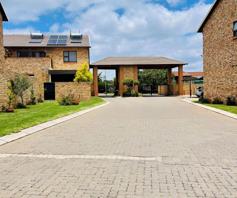
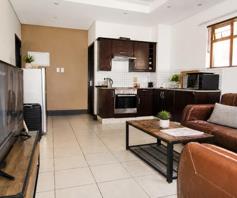
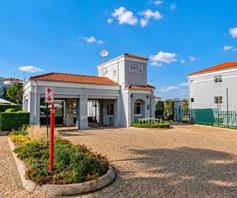
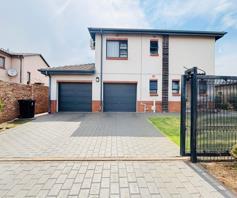
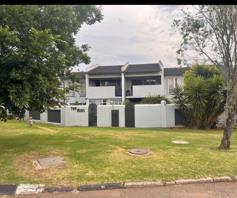
Overlooking the city of Durban and the Indian Ocean, perched on the crest of a ridge, is the residential suburb of Berea.

This home offers three bedrooms, two bathrooms and a garage. It is on the market for R1.8 million - click here to view.
Adrian Goslett, CEO of RE/MAX of Southern Africa, says the property market in Berea West was relatively unaffected by the recession, with property prices currently at record highs.
The average price of a freestanding home is currently at R1.565 million, while the average price of a sectional title unit is R1.649 million. According to figures from Lightstone, from 2004 until 2008, property prices in Berea West saw a steady increase, dipping only slightly in 2009. Prices recovered in 2010 and stabilised in 2011. However, from 2012 prices began to climb and have now reached record levels.
Goslett says the market stock of property in the area consists mostly of freestanding homes (86.68 percent), while around 13.32 percent consists of sectional title units. He notes that a large number of the recent buyers in the area are under the age of 50 years, with over 42 percent falling into the 36 to 49 year old age group and around 38 percent aged between 18 and 36 years old.

This home has four bedrooms, two bathrooms, dining room, entertainment area and parking for six cars. It is priced at R2.5 million - click here to view.
Consumers aged between 36 and 49 years old account for the largest group of existing homeowners (37.58 percent), along with the highest percentage of recent sellers (33.33 percent) in the area.
According to Goslett, from 2004 until 2007, the average number of property transactions was around 129 per year, which dropped to 91 in 2008 and to 80 in 2009. However, in 2010 the number of property sales began to increase with the average number of properties sold per year climbing to 96 in 2012. To date, 58 properties have been sold during 2013.
He says nearly half of all the homes in area sold between June 2012 and May 2013 were those priced between R800 000 and R1.5 million. Properties that fell within the R1.5 million to R3 million category represented 38.7 percent of the area’s sales, while properties between R400 000 and R800 000 represented 9.7 percent. Goslett notes that properties sold for more than R3 million represented 3.2 percent of the market, as did those that sold for below R400 000.

This house offers five bedrooms, four bathrooms, a swimming pool and double garage. It is on the market for R2.35 million - click here to view.
Initially Berea was inhabited by King Shaka and his Zulu warriors, the first European settlers came to the area by a British ship commanded by Lt. James King in 1823.
After seeing the bay and land in the region, King went back to England to try and muster support for a settlement at the bay, which he called Port Natal. Although his attempts to gain support were unsuccessful, he returned to the area befriending Shaka, who granted him land around the bay.
Accompanied by two of Shaka’s chiefs, King attempted to sail back to England to once again petition for settlement support, however, he got no further than Port Elizabeth. Discouraged by his failed efforts, King eventually moved across the bay to the Bluff. He later died of dysentery in 1828, leaving uncertainty regarding the future of Port Natal with the number of settlers diminishing to only six at one point. During the same year, Shaka was assassinated and his half-brother, Dingane, assumed power.
One of Port Natal’s earliest settlers, Captain Allen Francis Gardiner, attempted to convert the Zulu tribe to Christianity, however, he was rejected by Dingane and forced to flee. He retreated to the hills above Port Natal and founded a small church which he called Berea.
The once forested region saw vast development, with many of Durban’s oldest mansions built in the area. Today, Berea is scattered with various types of architectural styles that include large Victorian and Edwardian homes supporting the city’s label as the last British outpost in South Africa.
Berea is currently the third most expensive real estate region in KwaZulu-Natal, after Umhlanga and Durban North. Although it began as a mostly residential area, it now homes a bustling commercial centre, humming with restaurants, coffee shops and listed buildings.