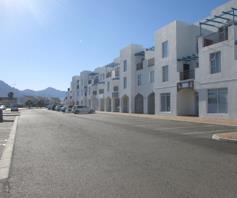
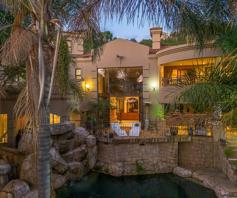
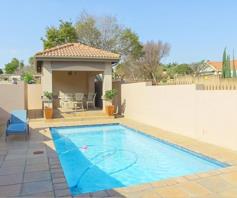
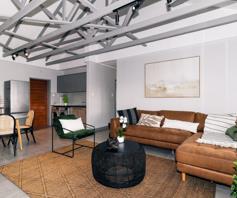
Perhaps more than any other town in South Africa, Paarl, the third oldest in the country, and the largest in the Cape Winelands, represents an eclectic mix of both historic and modern houses juxtaposed in many areas and suburbs.
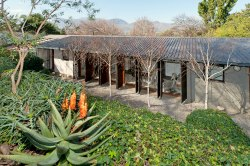 This four bedroom house in Paarl has an open-plan kitchen and lounge, a study, fireplace, air conditioning and patio. It is priced at R5.995 million - click here to view.
This is according to Surina du Toit, area manager for Pam Golding Properties, who says the variety of architectural styles, spanning centuries, blend together well.
Du Toit says Paarl has retained its unique historic appeal, even amidst all the development which has gone on over the past few decades. Today, the heart of the town is a sought-after business hub, with some homes having been converted to businesses, and used for offices, coffee shops, restaurants and the like.
Situated 60km north-east of Cape Town, modern-day Paarl is self-sufficient, offering every amenity you could ask for, but agriculture remains its backbone,
“Today Paarl is as equally recognised for its excellent schooling facilities as it is for its agriculture,” says Du Toit.
“Popular among home buyers from around the country with school-going children, Paarl offers a range of job opportunities, being home to large industries like Pioneer Foods and KWV, as well as other businesses such as fruit exporters.”
She says there is a strong foundation of solid family values, which makes it ideal for raising a family. The town offers a unique blend of people from young to elderly, professionals, artists, holidaymakers and those who enjoy the quality of life in a town that is small enough, yet large enough to offer you everything.
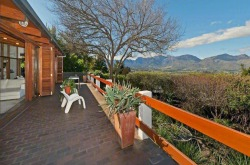 Bauhaus architecture highlights the importance of orientation and space transition. This house sits comfortably within its surroundings, at one with the site, its topography, views and the falling of light, says Du Toit.
Strolling down the main road and through the surrounds on the Paarl Historic Walk, the rich heritage of the town is evident, with many National Monuments within a few kilometres, she says.
In this area, you will find numerous buildings of architectural and historical importance, for example, the oldest church still in use in South Africa; the Strooidakkerk, built in 1804.
Georgian-style buildings rub shoulders with Victorian-style houses, many of which were converted from Cape Dutch style according to the architectural trends at the time.
Du Toit says historic homes available to purchase are scarce and popular among a range of buyers because of their rarity appeal and compelling ambience. Many buyers are also drawn, in particular, by homes that have been “sympathetically” renovated, as well as by the large stands, oak trees, rolling lawns and historic farms.
Then, again, she says some buyers prefer a modern home with contemporary architecture and open-plan living spaces, modern finishes and scenic views. They want a house that can accommodate the style of living in Paarl, which combines an indoor and outdoor lifestyle with large sliding doors, spacious outside entertainment areas and patios.
“With new homes generally only becoming available in newly developed estates, and only a handful of undeveloped freehold stands available in Paarl, a rare opportunity has come onto the market,” says Du Toit.
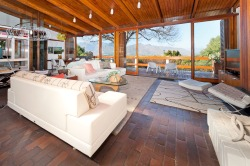 Du Toit says the single storey Bauhaus-inspired home features an open-plan living area.
She says a luxurious modern home on a 2 551sqm erf, ideally positioned in the heart of Paarl, is now available for purchase.
“Properties of this calibre seldom come onto the market,” says du Toit.
Restored to perfection three years ago and designed in 1974 by world-renowned Bauhaus architect Pius Pahl, she says the timeless design of this spacious four bedroom, two bathroom home is very much in vogue right now. The Bauhaus was an influential modernist art school in Germany, founded in 1919.
Pahl spent a year planning the house, including considerable time on site deciding precisely where the house should be built, before he began the design. This is one of the first examples in South Africa of a home built around the indoor-outdoor lifestyle.
“This architectural gem on the slopes of Paarl Mountain has been sensitively renovated to unlock its serenity and intimate connection with its natural surrounds,” says Du Toit. The single storey Bauhaus-inspired home features an open-plan living area and kitchen, second lounge, four bedrooms, study and two bathrooms. The double garage has been converted into a large studio or flatlet with an en suite bathroom, and has direct access to the house.
She says the views, wide wooden ceilings and clay tiled floors throughout, appealing courtyard and a wild terrace garden are just some of the special features of this tranquil family home.
Bauhaus architecture highlights the importance of orientation and space transition. This house sits comfortably within its surroundings, at one with the site, its topography, views and the falling of light, says Du Toit. This property is on sale for R5.995 million.