Storing recycling at home can be challenging, but when correctly set up and managed, it can help greatly at keeping your home organised and making it easier for your recyclables to end up where they truly belong – at your nearest recycling centre.
READ: Green your world: Grow veggies in recycled containers
Adrian Goslett, Regional Director and CEO of RE/MAX of Southern Africa, says that we should all do our bit to help reduce the amount of waste that ends up in local landfills. “Setting up a recycling management system in your household will ultimately contribute towards greater environmental sustainability,” he comments.
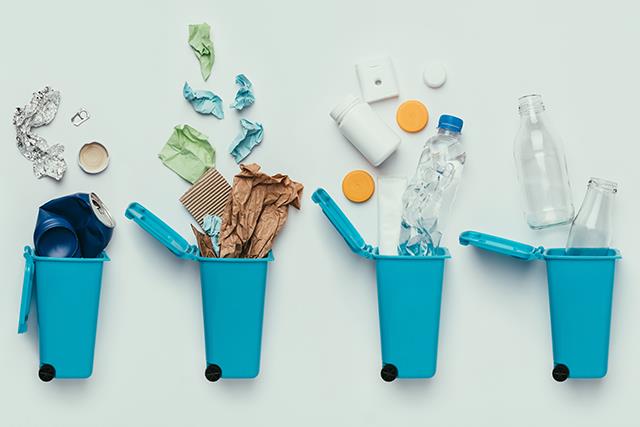
To help homeowners practise this sustainable habit, here are tips on how to effectively manage and store recycling at home.
1. Designate a recycling area
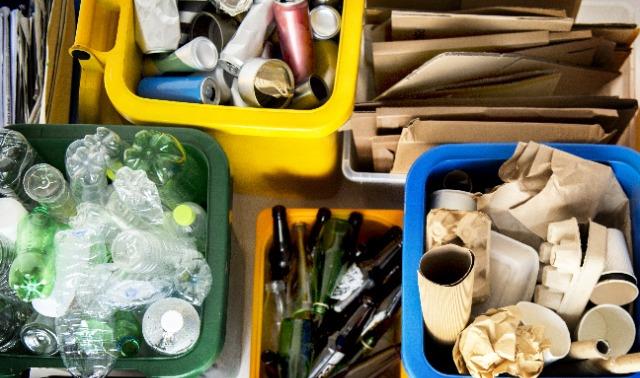
Choose a specific area in your home to serve as your recycling centre. For convenience, it should be easily accessible and ideally near your trash disposal area. To prevent unsightly pileups or lingering odours, consider areas like the garage or a covered outdoor area at the side or the back of the home. Having your recycling set up near to a sink could be useful because it is important to rinse out containers to remove any food residue and to remove all screw caps, otherwise these items might be rejected at recycling facilities.
2. Print out a recycling schedule
It can be easy to forget about the recycling, especially if it is stored out of sight and out of mind. If you live in an area where your recycling is collected, print out a calendar and mark off the recycling collection days, or set up a reminder on your phone. If you have to drop off your recycling yourself, it can still be helpful to set up a reminder to drop it off once every second week or once a month, depending on how much recycling your household creates.
3. Find out what is recyclable
Not all materials are accepted for recycling in every area, so it's important to find out what can and cannot be recycled in your community. If you are unsure, get in touch with your local recycling centre to find out what their requirements are. Some facilities might require that you separate your recycling (e.g. paper and cardboard separated from plastics and also separated from glass items, etc.) while others might be willing to accept unsorted drop-offs.
If you are not sure where to start with setting up your at-home recycling station, reach out to your local real estate agent for some local insights and best practises. “While real estate agents primarily focus on property transactions, they are also useful at providing their clients with local information, resources, and guidance. They might be able to point you in the right direction on where the nearest recycling point may be, and could share insights into which eco-friendly features could add value to your home,” Goslett says.
Recycling tips from TheSpruce to keep your recycling bin clean longer
A little extra effort before you place recyclables in the bin will keep the bin clean much longer. You should also check with your municipality to determine their regulations for recycling. Many places will not accept recyclables that are soiled with food.
- Rinse bottles, cans, and plastic containers before recycling. You don't need to scrub them to a pristine state but a quick scrape and rinse to remove food particles and sticky residue will keep your recycling bin clean and fresh much longer.
- Replace lids on plastic bottles to prevent leaking if your area doesn't require the separation of materials or if the lids are the same material as the bottles.
- Do not allow water or food liquids to accumulate in the bottom of the bin. If the bin is stored outside, be sure it has small drainage holes to allow moisture to escape. If the bin doesn't have holes, use a small drill or awl to create some.
- Place layers of newspaper in the bottom of the bin to absorb drips. This technique works best if the bin is stored indoors.
- Add a liner to the bin. A liner will keep the bin cleaner longer but be sure to check that it is made of a material that can be recycled along with the contents of the bin.
Want all the latest property news and curated hot property listings sent directly to your inbox? Register for Property24’s Hot Properties, Lifestyle and Weekly Property Trends newsletters or follow us on Twitter, Instagram or Facebook.