In an unexpected move last week, the Reserve Bank of South Africa (SARB) hiked interest rates by 50 basis points to 5.5 percent per annum from 5.0 percent as of 30 January, as a result, commercial banks raised their prime lending and variable mortgage rates to 9 percent per annum from the same date.

Lezanne Human, chief executive officer of FNB Savings and Investments, says this increase brings with it an increase in the cost of servicing debt, which means that many South Africans will have less disposable income than before.
According to Peter Attard Montalto, Nomura research analyst, they see this hike as the beginning of a 200 to 250 basis points hiking cycle that should be completed by the middle of 2015, in fact, he says we can expect another two hikes this year and most likely in the second half.
The key motivating factor behind the decision to raise the repo rate was the deterioration in the SARB’s assessment of the inflation outlook, explains Investec’s Annabel Bishop.
She notes that the SARB raised its inflation forecasts, and the extent of the increase was relatively material - the SARB now expects CPI inflation to average 6.3 percent in 2014 versus a forecast of 5.7 percent at the November 2013 Monetary Policy Committee (MPC) meeting.
“The SARB anticipates that CPI will breach the 3-6 percent target in Q2 2014 and peak at 6.6 percent in Q4 2014 and inflation is then expected to moderate to an average of 6.0 percent in 2015 which, is markedly higher than the 5.4 percent forecast at the prior MPC,” says Bishop.
Furthermore, she says the SARB continues to consider the growth outlook to be precarious owing to both internal and offshore dynamics and lowered its GDP forecast for 2014 from 3.0 percent to 2.8 percent with GDP growth in 2015 expected to reach 3.3 percent instead of 3.4 percent.
Bishop says the possibility of further interest rate hikes later this year cannot be completely ruled out.
Bankers on interest rates
Lezanne Human, chief executive officer of FNB Savings and Investments, says this increase brings with it an increase in the cost of servicing debt, which means that many South Africans will have less disposable income than before.

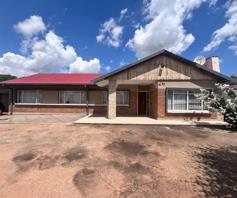
A three bedroom home in Bryanston, Johannesburg, is selling for R3.7 million through Seeff Sandton. Click here to view.
“Although savers will be excited about the increased return on their cash investments, the higher cost of servicing debt may result in consumers cutting back on their savings.”
However, she says saving for goals, such as your child’s school fees and your retirement, can’t be delayed.
“Consumers should adjust their budget accordingly (however painful that may be in the short term) to ensure that they continue to save for these life events that will inevitably happen.”
The good news is that – while making sacrifices by saving for these goals – consumers are simultaneously benefiting from higher returns on their cash investments, says Human.
Jacques du Toit, property analyst at Absa Home Loans says the rate hike and any possible further rate hikes, will increase the pressure on an already financially strained household sector in view of low economic, employment and income growth, while inflationary pressures are mounting and household debt remains relatively high.
Click here to read about the impact of interest rates on households.
“As a result, the property market is expected to reflect these conditions, with market activity, transaction volumes, house prices and the demand for and the accessibility and affordability of mortgage finance to be adversely affected.”
Interest rates and the property market
Many estate agents have reacted with shock and disappointment to the SARB rate hike which they say was quite unexpected.

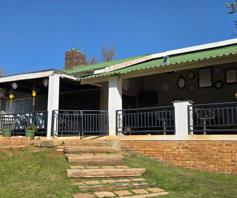
Priced at R350 000, this three bedroom home in Bethelsdorp & Ex in Port Elizabeth is selling through RE/MAX Algoa. Click here to view.
“It is unlikely to make a real difference other than to cool the economy and impact on the current positive sentiment in the housing market,” says Seeff chairman, Samuel Seeff.
He explains that based on a bond rate of 8.5 percent and a 20 year repayment period, a homeowner with a bond of about R800 000 would see his/her repayment increase by R255 per month from around R6 934 per month to R7 189.
Seeff says the real drag on the market remains the tight mortgage lending criteria despite the fact that even with the rate hike, mortgages are still more affordable than ever.
Given that about 90 percent of all home buyers require some form of financial assistance, we would once again call for more relaxation of the stringent lending criteria, he says.
Measures such as a longer repayment period for first-time buyers and access to finance for self-employed and small business owners in view of the rise in this sector of the economy could have a real effect, according to Seeff.
On a R500 000 bond at prime of 9 percent versus the previous 8 percent, the repayments will increase by R150 per month and on a million rand bond, the repayments over 20 years will increase by R320 per month, says Herschel Jawitz, chief executive officer of Jawitz Properties.

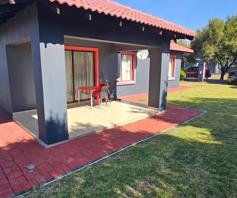
A four bedroom home in Clare Estate in Durban is selling for R975 000 through Leapfrog Durban Central. Click here to view.
“From an affordability point of view, property prices are still fairly valued and interest rates, even with the increase, are at low levels so the buying proposition remains strong,” he says.
However, he says the impact on consumer confidence is hard to measure noting pressure on disposable income, Gauteng tolls, the high cost of electricity plus the looming elections this year, so it remains to be seen whether the increase in buyer activity, that we have seen over the previous six months, will continue or whether buyers will stop and pause to take stock of where they are.
Meanwhile, while Riaan Roos, chief executive officer of MSP Developments expects rates to increase by another 50 basis points by the end 2014, and to gradually decreases again in 2015, Tony Clarke, managing director of the Rawson Property Group says the rate hike will depress house price growth to an extent where it will fall below inflation, seeing house prices growing at a negative figure in real terms.
“The rise in the interest rate will also affect all of those who have recently bought homes as these will now have to be reassessed to make sure that the borrower is able to afford the new purchase.”
He says mortgage availability will come under more pressure as borrowing costs will now also go up which will come as a hard hit to an economy that has struggled to recover from the worst recession in modern history.

Located in Fresnaye, Cape Town, this four bedroom house is selling for R6.5 million through Jawitz Atlantic Seaboard. Click here to view.
“While we did not expect a change in the interest rate so soon, homeowners should tighten their belts as household debt-to-disposable-income is still high and the interest rate is likely to go up yet again so now is the time to save by paying into your bond,” says Bruce Swain, managing director of Leapfrog Property Group.
Swain urges homeowners and buyers to remember that it's best to take a long-term perspective when dealing with property - over the long term, house prices have continually increased in value and, regardless of short term hurdles, property remains the best investment opportunity for the average South African.
According to Adrian Goslett, chief executive officer of RE/MAX of Southern Africa, despite the rate hike, the prime lending rate still remains favourable to would-be property buyers and consumers.
Goslett advises consumers to take advantage of the interest rate level, as it is still at one of its lowest points in the last 50 or more years.
“Consumers should pay any extra money into their outstanding debts or pay down their bonds if they own a property, not only will this assist them to cope with the increasing cost of living, it will also reduce the term of the bond substantially,” he adds. – Denise Mhlanga